
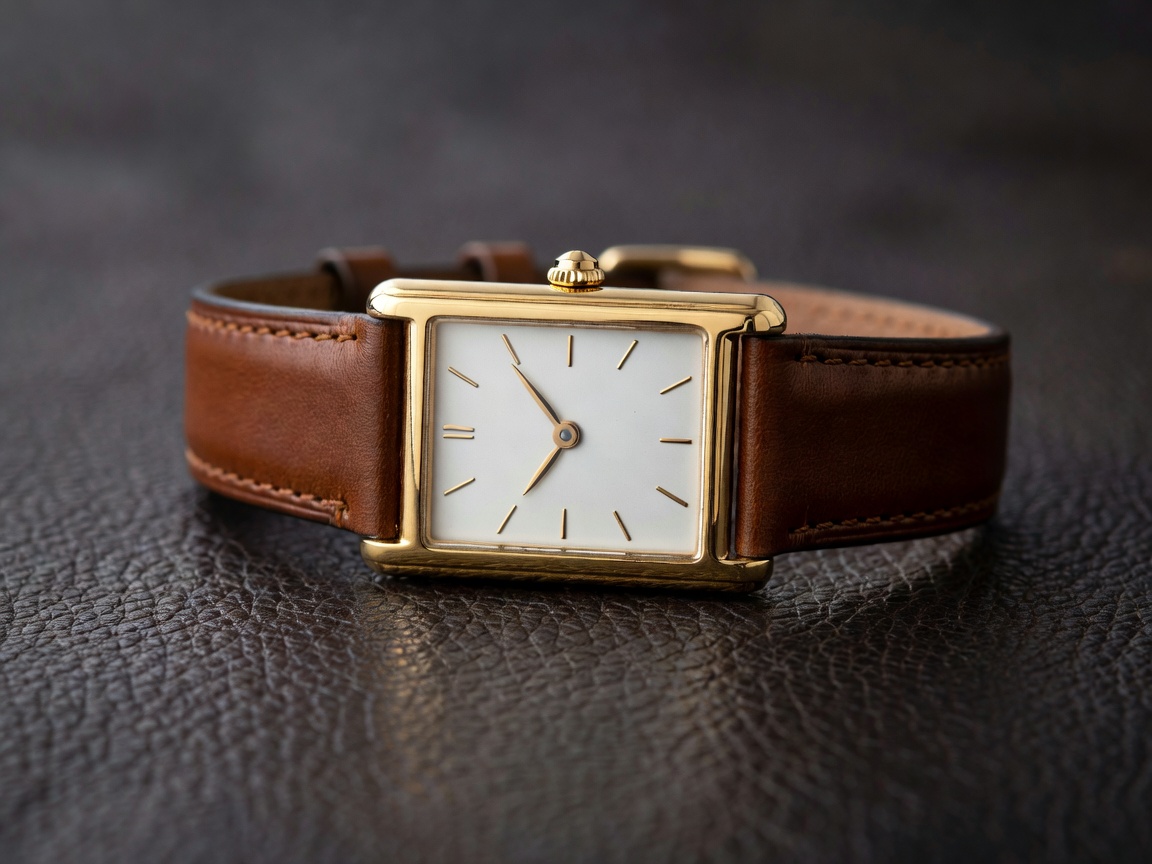
Overview and history
Louis Cartier designed the Tank in 1917, taking inspiration from the overhead view of the Renault FT tank: the vertical case sides, known as brancards, echo the tracks, while the central case resembles the turret. It reached customers in 1919 and has been in Cartier's catalogue in various forms ever since.
Notable early and mid-century variations include the Tank Cintrée (1921), the Tank Louis Cartier (1922) and the Tank Basculante (1932). The Must de Cartier line arrived in 1977, initially in silver-gilt vermeil, and the Tank Américaine followed in 1989. For vintage buyers, this means a very broad choice of cases, sizes and finishes.
Movements
Tanks from the vintage period use manual-wind movements, often based on calibres from specialist ébauche suppliers such as Jaeger-LeCoultre and the European Watch & Clock Co., while many Must de Cartier models use quartz movements. Always confirm which movement a specific watch contains, because it affects both servicing and value.
Why collectors love it
- Timeless design. A Tank looks right with both a suit and a T-shirt.
- Choice. From slim manual-wind gold watches to colourful Must models, there is a Tank for most budgets.
- Approachable cost. Prices are generally lower than for the other watches in this list.
What to inspect before buying
- Case shape and numbers. Check hallmarks and case numbers, and watch for heavily polished brancards.
- Dial signature. Printing should be crisp, with correct Roman numerals and railway minute track.
- Plating (vermeil models). Heavy wear through the gold layer is common and affects value.
- Clasp and strap. An original Cartier buckle or deployant adds value.
- Movement type and service. Ask whether it is manual or quartz and when it was last serviced.
Pros
- Iconic Art Deco design
- Wide variety and sizes
- Comfortable and dressy
- Lower entry price
Cons
- Model names and variants can confuse beginners
- Quartz versions have less collector interest
- Limited water resistance
- Some models are small by modern taste
Price and market notes
Vintage examples commonly trade from around US$2,500 to US$15,000, depending on material, size, movement and condition. Solid gold, manual-wind models in excellent condition sit at the upper end.